Cold calling objections are predictable. The hard part is responding in a way that keeps the conversation professional and moves it forward. How to Handle Cold Calling Objections: Proven Response Strategies focuses on a simple idea: treat every objection as a request for clarity, not a personal rejection. When cold calling objections handling becomes a routine skill, reps stay concise, ask better questions, and qualify faster.
Objections also increase when the call list is loose. Calling the wrong titles creates avoidable pushback, especially around budget, timing, and ownership. Teams that improve targeting often hear fewer reflex objections and have more useful conversations. The pillar guide on getting proven business leads from a powerful scraping service explains how compliant, accurate lead sourcing supports scalable outreach.
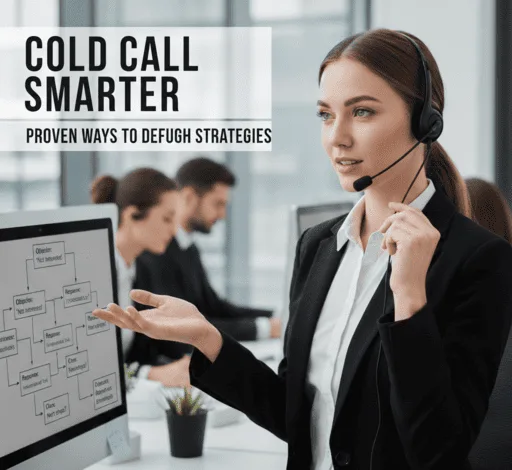
How to Handle Cold Calling Objections: Proven Response Strategies using a 5-step framework
A consistent framework keeps reps from improvising and overexplaining. Use the same five steps on every call, even if the wording changes.
- Acknowledge the objection in one sentence.
- Clarify the objection with a specific question.
- Confirm the decision factor (priority, budget, timing, or risk).
- Respond with one relevant point tied to the decision factor.
- Ask for a next step (meeting, referral, or email permission).
A quick example:
- “Understood. When you say timing is not right, is the issue budget timing or bandwidth on your team?”
That question turns a vague timing objection into information you can act on.
Pricing objections: response strategies that avoid early negotiation
Pricing objections usually appear before the prospect understands the scope. The goal is not to defend pricing on a cold call. The goal is to qualify whether the prospect has a real use case and the ability to buy.
Use three moves:
- Shift from price to scope: “Pricing depends on what you need.”
- Shift from scope to outcome: “What result matters most?”
- Check buying involvement: “Do you own budget for this area?”
Pricing objection response templates
- “Too expensive.”
- “Fair point. What outcome would make this worth paying for: more pipeline, less manual work, or lower risk?”
- “No budget.”
- “Understood. Is the issue the budget cycle, or is the category not funded?”
- “Send pricing.”
- “I can send a range. Before I do, what is the current approach and who uses it?”
If pricing objections dominate calls, review list quality. Calling roles without budget influence produces predictable resistance. Better targeting from compliant lead generation using professional scraping services helps teams reach stakeholders who can discuss scope and spend.
Timing objections: how to qualify without pressure
the meaning of Timing objections “busy” or “not a priority.” The best response is a short follow-up question that finds the trigger for action.
Timing objection response templates
- “Call next quarter.”
- “I can do that. What usually triggers action next quarter: budget approval, hiring, or a deadline?”
- “We are busy.”
- “Understood. Would a 10-minute fit check next week work, or should I send a short email summary first?”
- “We already have a plan.”
- “Good. Which part is hardest right now: sourcing, delivery, or measurement?”
Close timing objections with permission-based next steps: “If I follow up after [trigger], would that be helpful?”
Security concerns: how to answer clearly and route to the right owner
Security concerns are common in procurement-heavy environments. A strong response acknowledges the concern and offers an evaluation path. Avoid dumping details on a cold call.
For teams doing outbound at scale, the FTC Telemarketing Sales Rule is a useful reference for baseline telemarketing compliance.
Use a simple pattern:
- “Security review is standard.”
- “I can share a security overview and the data handling approach.”
- “Who owns vendor risk review on your side?”
Security questions often connect to data handling. Prospects may ask how lead data is sourced, stored, and delivered. The pillar page on safe, compliant B2B lead sourcing through a scraping service covers the vendor controls that responsible outreach programs should expect.
Vendor loyalty objections: how to qualify without criticizing the current vendor
Vendor loyalty objections sound like “We already use someone.” Sometimes the prospect is satisfied. Sometimes the prospect is ending the call. Either way, avoid attacking the current vendor and look for gaps.
Vendor loyalty response templates
- “That makes sense. What do you wish the current approach did better?”
- “Where do you still spend time manually: sourcing, enrichment, or outreach?”
- “If nothing changes, what cost or risk stays the same?”
If the prospect is genuinely satisfied, end cleanly and protect the relationship:
- “Understood. If priorities shift later, who should I follow up with?”
PAA: How do you handle a prospect who says “Not interested” on a cold call?
You handle “Not interested” by clarifying what the prospect is rejecting and offering a low-pressure exit. Ask whether the issue is timing, fit, or being the wrong contact. If the prospect stays closed, request a referral to the right owner or permission to send a one-paragraph summary.
PAA: What is the best structure for cold calling objections handling?
The best structure for cold calling objections handling is a short five-step flow: acknowledge, clarify, confirm the decision factor, respond with one relevant point, and ask for a next step. A consistent structure prevents rambling and helps reps qualify quickly without sounding defensive.
PAA: How can sales teams reduce pricing objections before the call starts?
Sales teams reduce pricing objections by improving targeting and setting clearer expectations in the opening. Call roles with budget influence, lead with a problem tied to the prospect’s job, and avoid pitching features early. Better-fit leads reduce price-based pushback that is really a fit issue.
PAA: How should reps respond to timing objections when the prospect is busy?
Reps should respond to timing objections by offering two low-friction options. Ask whether the prospect prefers a short fit check next week or a brief email summary first. A choice reduces pressure and still creates a next step. A follow-up question also uncovers the trigger for action.
PAA: What are the most useful objection response templates for beginners?
The most useful objection response templates for beginners are acknowledgment plus a clarifying either-or question. For example: “Understood. Is the bigger issue timing or budget?” Then follow with a next step request. Short templates help beginners stay calm while still sounding natural and professional.
FAQ: How to Handle Cold Calling Objections: Proven Response Strategies
Q: How long should an objection response be on a cold call? A: An objection response should usually be 10 to 20 seconds. Give one relevant point, then ask a question that moves the conversation forward.
Q: Should a sales rep push back multiple times on the same objection? A: A sales rep should usually address an objection once and then ask for a next step. Repeated pushback often creates friction and rarely changes the outcome.
Q: What should a sales rep do if the prospect is the wrong person? A: A sales rep should ask who owns the area and request an introduction or the correct contact details. The call can still be productive if you capture the right owner.
Q: How can a team practice objection handling without turning it into scripts? A: A team can role-play the top objections weekly using short frameworks and then review a few call recordings. Focus on pacing, questions, and next steps rather than memorized lines.
Conclusion: How to Handle Cold Calling Objections: Proven Response Strategies
How to Handle Cold Calling Objections: Proven Response Strategies works when reps stay brief, clarify the real issue, and earn a next step. Pricing objections, timing objections, security concerns, and vendor loyalty are normal parts of B2B outreach. The most consistent improvements come from better questions and better targeting.
Scalable growth also depends on lead quality. A compliant scraping service supports cleaner segmentation and more accurate dialing, which reduces avoidable objections and wasted effort. For a deeper look at safe, scalable sourcing, read getting proven business leads from a powerful scraping service.
Leave a Reply